
How Wheel Alignment Improves Driving Stability and Handling
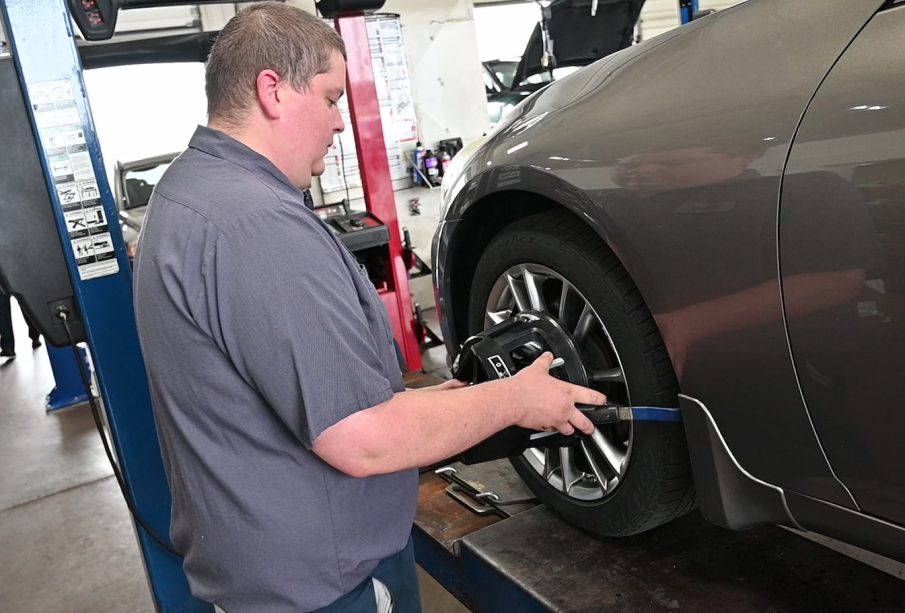
Wheel alignment plays a critical role in how a vehicle behaves on the road. Proper alignment ensures that tires meet the road surface at the correct angle and maintain the intended direction set by the manufacturer. When alignment is accurate, the vehicle responds predictably, improves safety, and enhances driving comfort.
Drivers often overlook wheel alignment until noticeable handling problems appear. However, regular alignment checks help maintain stability, extend tire life, and improve overall vehicle performance.
What Is Wheel Alignment
Wheel alignment refers to adjusting the angles of the wheels so they match the manufacturer’s recommended specifications. Contrary to common belief, alignment does not involve adjusting the tires themselves. Instead, technicians adjust suspension components connected to the wheels.
Proper alignment ensures that
- wheels point straight ahead
- tires maintain even contact with the road
- suspension components operate correctly
- steering remains centered and responsive
These adjustments directly influence how smoothly and safely a vehicle travels.
Key Wheel Alignment Angles That Affect Handling
Three primary alignment angles determine vehicle stability and control.
Camber Angle
Camber describes the inward or outward tilt of the tire when viewed from the front of the vehicle.
Correct camber improves
- cornering grip
- tire contact with road surface
- steering balance during turns
Incorrect camber leads to uneven tire wear and reduced traction.
Caster Angle
Caster refers to the angle of the steering axis when viewed from the side of the vehicle.
Proper caster improves
- straight-line tracking
- steering stability at higher speeds
- steering wheel return after turns
Vehicles with poor caster alignment often feel unstable on highways.
Toe Angle
Toe describes whether the tires point inward or outward when viewed from above.
Correct toe alignment ensures
- smoother steering response
- improved tire life
- better directional control
Even small toe misalignment can cause noticeable instability.
How Wheel Alignment Improves Driving Stability
Accurate wheel alignment directly affects how confidently a vehicle moves in a straight line and responds to steering inputs.
Maintains Straight-Line Tracking
Proper alignment allows the vehicle to travel straight without pulling to one side. This reduces driver fatigue and improves control during long drives.
Enhances Steering Precision
Aligned wheels respond more accurately to steering inputs. This improves maneuverability in traffic and increases driver confidence.
Improves High-Speed Control
Stable alignment reduces vibration and wandering at higher speeds. The vehicle remains steady even during lane changes or highway driving.
How Wheel Alignment Improves Vehicle Handling
Handling refers to how well a vehicle responds during turns, braking, and directional changes. Alignment plays a major role in this performance area.
Better Cornering Performance
Correct alignment keeps tires evenly planted on the road during turns. This improves grip and reduces the chance of slipping.
Balanced Weight Distribution
Proper alignment ensures suspension components distribute weight evenly across all wheels. This supports smoother handling on uneven surfaces.
Reduced Steering Wheel Vibration
Misaligned wheels often cause steering wheel vibration. Alignment adjustments eliminate this issue and restore smooth steering operation.
Signs Your Vehicle Needs Wheel Alignment
Drivers can identify alignment problems through several common symptoms.
Watch for these warning signs
- vehicle pulling to one side
- uneven or rapid tire wear
- steering wheel off-center while driving straight
- vibration in steering wheel
- reduced steering response
Ignoring these symptoms may lead to increased repair costs over time.
Benefits of Regular Wheel Alignment Maintenance
Routine alignment checks offer long-term advantages beyond improved stability.
Important benefits include
- extended tire lifespan
- improved fuel efficiency
- smoother ride quality
- reduced suspension wear
- improved braking control
Maintaining correct alignment protects multiple vehicle components simultaneously.
When You Should Get Wheel Alignment Checked
Wheel alignment should be inspected periodically or whenever specific conditions occur.
Recommended situations include
- after hitting potholes or curbs
- after replacing suspension components
- when installing new tires
- during routine service intervals
- if steering behavior changes suddenly
Regular inspections help detect issues early before they affect safety.
Professional Wheel Alignment vs DIY Adjustment
Wheel alignment requires specialized tools and precise measurement systems. Professional service centers use computerized equipment to ensure accurate adjustments.
Attempting alignment without proper equipment can lead to incorrect settings and unsafe driving conditions. Professional inspection ensures alignment meets manufacturer standards.
FAQ Section
How often should wheel alignment be performed
Most vehicles benefit from alignment inspection every 10,000 to 15,000 kilometers or during routine tire rotation schedules.
Does wheel alignment improve fuel efficiency
Yes. Proper alignment reduces rolling resistance, allowing the engine to operate more efficiently and consume less fuel.
Can poor wheel alignment damage suspension components
Yes. Misalignment increases stress on suspension parts, which may shorten their service life.
Is wheel alignment necessary after installing new tires
Yes. New tires perform best when alignment angles are set correctly according to manufacturer specifications.
Does wheel alignment affect braking performance
Proper alignment improves tire contact with the road surface, which supports safer and more controlled braking.
Can potholes affect wheel alignment immediately
Yes. Impact from potholes or road debris can shift alignment angles and cause steering instability.
How long does a professional wheel alignment service take
Most alignment procedures take between 30 minutes and one hour depending on vehicle condition and adjustment requirements.


